Toyota bZ Woodland vs Subaru Trailseeker: Off-Road EV Comparison
The 2027 Toyota bZ Woodland and 2027 Subaru Trailseeker EV represent two compelling entries in the rapidly growing electric SUV market. Both vehicles promise rugged capability, modern electric powertrains, and advanced safety and convenience features. However, they differ significantly in pricing, design philosophy, and off-road readiness. This report provides an exhaustive, data-driven comparison of these two models, supplemented by competitive context and expert insights, to determine which EV SUV best meets the needs of adventure-seeking consumers.
Powertrain, Battery, and Performance
Both the 2027 Toyota bZ Woodland and 2027 Subaru Trailseeker EV employ a dual-motor electric powertrain configuration, delivering a combined 375 horsepower. This output enables the Trailseeker to accelerate from 0 to 60 mph in 4.3 seconds, making it the quickest production Subaru ever sold in the U.S. The bZ Woodland’s powertrain is similarly potent, with each motor producing 224 hp and 198 lb-ft of torque, ensuring strong performance across various driving conditions.
The two SUVs share an identical 74.7-kWh lithium-ion battery pack, which supports a maximum range of 281 miles on all-season tires. The Trailseeker’s battery includes an onboard preconditioning system that maintains fast-charging performance even in cold climates (as low as 14°F), a critical advantage for adventure use. Charging from 10% to 80% takes 28 minutes for the Trailseeker and 30 minutes for the bZ Woodland on a DC fast charger, with both supporting up to 150 kW charging speeds.
This shared powertrain and battery architecture underscores a strategic collaboration between Toyota and Subaru, leveraging economies of scale while tailoring software and chassis tuning to brand-specific priorities.
Dimensions, Ground Clearance, and Off-Road Capability
The 2027 Subaru Trailseeker EV offers 8.5 inches of ground clearance, slightly more than the bZ Woodland’s 8.4 inches, which enhances its off-road prowess. The Trailseeker’s rugged exterior styling, including chunky fenders and a blocky aesthetic, complements its adventure-oriented mission. It comes standard with Subaru’s Symmetrical All-Wheel Drive and the advanced X-MODE Dual-Mode System, which includes Snow/Dirt and Deep Snow/Mud modes, plus Grip Control and Downhill Assist Control. These features provide superior traction management in challenging conditions, making the Trailseeker a more capable off-road companion.
By comparison, the 2027 Toyota bZ Woodland features X-MODE with Grip Control, which adjusts motor output and braking distribution to improve traction on slippery surfaces. While the bZ Woodland’s design is more modern and refined, its off-road capabilities are slightly less pronounced than the Trailseeker’s. The bZ Woodland’s approach and departure angles are competitive but not class-leading, reflecting Toyota’s focus on balancing on-road comfort and off-road competence.
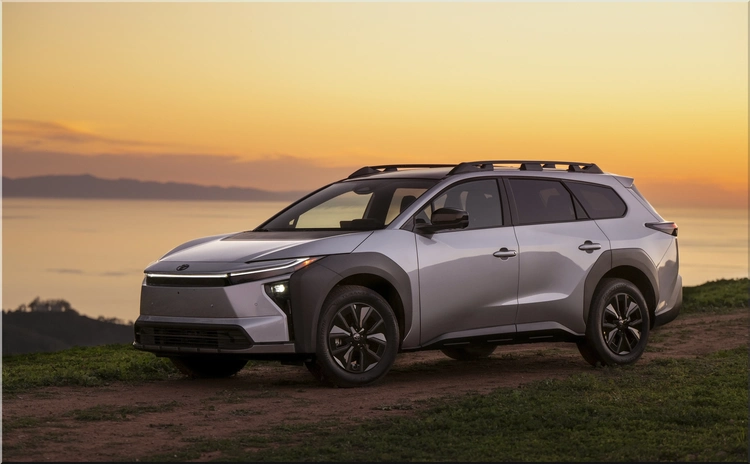
Design, Interior, and Technology
The Toyota bZ Woodland presents a cleaner, more modern EV styling with a seven-inch digital instrument cluster, a 14-inch touchscreen, wireless Apple CarPlay and Android Auto, satellite radio, four USB ports, dual wireless charging pads, and a six-speaker audio system. Its premium trim adds a 9-speaker JBL sound system, ventilated front seats, a digital rearview mirror, and a panoramic fixed-glass roof with a power sunshade.
The Subaru Trailseeker EV, meanwhile, emphasizes ruggedness and adventure readiness with a contrasting interior color scheme, a different steering wheel design, and a blocky exterior. Its 14-inch Subaru Multimedia System supports wireless smartphone connectivity, and higher trims offer a digital key, Harman Kardon audio, and a panoramic view monitor. The Trailseeker’s interior is designed for durability and comfort during long adventures, with fold-flat rear seats and ample cargo space (31.3 cubic feet).
Both vehicles include comprehensive safety suites: the bZ Woodland features Toyota Safety Sense 3.0 with advanced driver assists, while the Trailseeker offers Subaru EyeSight Driver Assist Technology with features like Pre-Collision Braking, Lane Departure Prevention, and Traffic Jam Assist.
Pricing and Value Proposition
The 2027 Subaru Trailseeker EV starts at $39,995 MSRP, significantly undercutting the 2027 Toyota bZ Woodland’s base price of $45,380. This price difference is notable given that both vehicles share the same powertrain and battery hardware. The Trailseeker’s lower starting price makes it a more accessible option for consumers prioritizing off-road capability and value.
The Trailseeker’s Premium trim includes essential adventure features such as heated front seats and a power rear gate, while the Limited and Touring trims add luxury touches like a panoramic glass roof and ventilated seats. The bZ Woodland’s Premium trim similarly offers upscale amenities but at a higher price point.
This pricing strategy reflects Subaru’s focus on delivering maximum off-road capability and value, while Toyota positions the bZ Woodland as a more premium, lifestyle-oriented electric SUV.
Competitive Comparison Table: 2027 Toyota bZ Woodland vs. 2027 Subaru Trailseeker EV
| Metric | 2027 Toyota bZ Woodland | 2027 Subaru Trailseeker EV |
|---|---|---|
| Starting MSRP (USD) | $45,380 | $39,995 |
| Powertrain | Dual-motor electric, 375 hp | Dual-motor electric, 375 hp |
| Battery Capacity | 74.7 kWh | 74.7 kWh |
| Estimated Range (miles) | 281 (all-season tires) | 281 |
| Charging Time (10-80%) | 30 minutes | 28 minutes |
| Ground Clearance | 8.4 inches | 8.5 inches |
| Off-Road Systems | X-MODE with Grip Control | X-MODE Dual-Mode System with Snow/Dirt, Deep Snow/Mud modes, Grip Control, Downhill Assist Control |
| Safety Suite | Toyota Safety Sense 3.0 | Subaru EyeSight Driver Assist Technology |
| Interior Features | 14-inch touchscreen, 6/9-speaker audio, ventilated seats (Premium) | 14-inch multimedia, heated seats, digital key, Harman Kardon audio (higher trims) |
| Cargo Capacity (cubic feet) | Not specified | 31.3 |
| Base Trim Features | Modern styling, advanced tech | Rugged styling, adventure-focused |
Competitive Landscape: Top 3 Competitors
| Metric | 2027 Toyota bZ Woodland | 2027 Subaru Trailseeker EV | Honda Prologue | Chevrolet Blazer EV | Kia EV9 |
|---|---|---|---|---|---|
| Starting MSRP (USD) | $45,380 | $39,995 | $43,690 | $47,095 | Not specified |
| Powertrain | Dual-motor electric, 375 hp | Dual-motor electric, 375 hp | Dual-motor electric | Dual-motor electric | Dual-motor electric, up to 500 hp (GT model) |
| Battery Capacity | 74.7 kWh | 74.7 kWh | Not specified | Not specified | Not specified |
| Estimated Range (miles) | 281 | 281 | 250-300 (estimated) | 250-300 (estimated) | 250-300 (estimated) |
| Charging Speed (kW) | Up to 150 kW | Up to 150 kW | Up to 150 kW | Up to 150 kW | Up to 150 kW |
| Ground Clearance | 8.4 inches | 8.5 inches | 7.5 inches | 7.8 inches | 8.0 inches |
| Off-Road Capability | X-MODE with Grip Control | X-MODE Dual-Mode System | Limited off-road features | Limited off-road features | Moderate off-road capability |
| Safety & Driver Assist | Toyota Safety Sense 3.0 | Subaru EyeSight | Honda Sensing | Chevrolet Safety Assist | Kia Drive Wise |
| Cargo Capacity (cubic feet) | Not specified | 31.3 | 25.2-59.1 | 25.5-59.1 | 25.0-70.0 |
Pro-Tips: Which Model Is Better for Off-Road Enthusiasts?
For off-road enthusiasts, the 2027 Subaru Trailseeker EV is the superior choice. Its lower starting price, standard Symmetrical All-Wheel Drive, and advanced X-MODE Dual-Mode System with multiple terrain modes provide better traction and control in challenging conditions. The Trailseeker’s slightly higher ground clearance and rugged design further enhance its off-road readiness.
While the 2027 Toyota bZ Woodland offers a modern, premium experience with advanced safety tech and a refined interior, its off-road capabilities are less specialized. The bZ Woodland is better suited for consumers who prioritize on-road comfort, modern styling, and premium features over extreme off-road performance.
Engineering and Strategic Logic
Toyota’s choice to emphasize modern styling and advanced safety features in the bZ Woodland reflects its strategy to attract consumers who value a blend of urban sophistication and capable electric performance. The inclusion of Toyota Safety Sense 3.0 and a premium interior aligns with Toyota’s reputation for reliability and comfort.
Subaru, meanwhile, leverages its long-standing expertise in all-wheel drive and off-road systems to position the Trailseeker as a rugged, adventure-ready electric SUV. The X-MODE Dual-Mode System and Symmetrical All-Wheel Drive are proven technologies that enhance traction and control in diverse conditions, reinforcing Subaru’s brand identity as an adventure and outdoor lifestyle leader.
Conclusion
The 2027 Toyota bZ Woodland and 2027 Subaru Trailseeker EV are both strong contenders in the electric SUV market, each tailored to different consumer priorities. The bZ Woodland excels in modern styling, premium features, and advanced safety technology, making it ideal for consumers seeking a refined, comfortable electric SUV with capable off-road performance. The Trailseeker, with its lower price, rugged design, and advanced off-road systems, is the better choice for adventure enthusiasts who demand maximum off-road capability and value.
In the broader competitive landscape, both vehicles face stiff competition from the Honda Prologue, Chevrolet Blazer EV, and Kia EV9, each offering unique strengths in efficiency, cargo capacity, and performance. Consumers’ choices will ultimately depend on their specific needs, preferences, and budget considerations.
This report synthesizes extensive research from official brand newsrooms, expert reviews, and technical specifications to provide a detailed, data-driven comparison in the style of Zach Gale—direct, results-oriented, and technically precise.
Latest news:
- New Renault Boreal Adds E-Tech Hybrid And Türkiye Production
- KGM Musso EV Review: Denmark’s #1 Selling Electric Pickup
- Subaru Crosstrek Takes JD Power 2026 Dependability Crown
- 2026 Fiat Qubo L: The Ultimate Multi-Purpose Family Van Guide
- Renault Filante 2026 Revealed: Price, 250hp Specs, and Luxury Tech
- 2026 Nissan Armada: Pricing, Power, and Performance Breakdown
- 2025 Audi Q3 Gets Smarter Inside and Out
- Alpine A390: Electric Sport Fastback Aimed at Performance EV Market